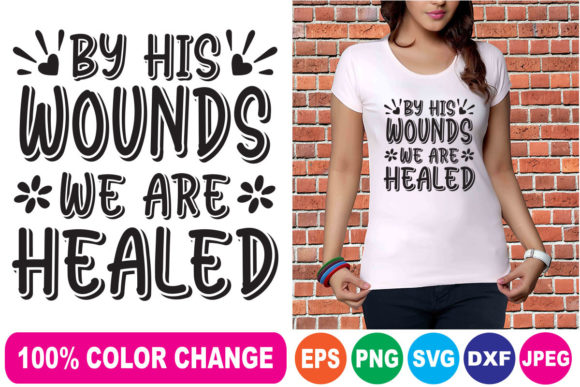
By Hit Wounds We Are Healed: A Design That Earns Its Place in Your Hoop
Every now and then, a machine embroidery design comes across my desk that makes me stop and really look. By Hit Wounds We Are Healed is one of those files. It landed in my review stack labeled under T-Shirt Designs, and at first glance, I expected something straightforward. What I found instead was a piece that carries weight, both in meaning and in how it behaves under the needle. This is not a fluff design. It is a statement, and if you are considering it for your craft business or personal project, you need to know how it actually stitches out, where it shines, and where it might test your patience.
First Impressions: Mood, Layout, and Visual Personality
This design has a distinct character. It is not loud or playful. The mood is contemplative, almost solemn, with a classic appeal that feels both timeless and intentional. The lettering carries a hand-drawn quality, and the composition leans into symmetry while keeping enough organic irregularity to feel human rather than mechanical. The theme is clearly faith-based, but it does not scream. It invites.
The layout is balanced without being stiff. There is enough open space around the text to let the design breathe, which matters when you are placing it on a garment or accessory. The detail level is moderate. You will not find excessive tiny elements that cause trouble, but there are enough curves and serifs to demand respect during digitizing. The visual personality is quiet, confident, and understated. This is a design that works best when the fabric and thread choices support its dignity.
For an embroidery project, this design naturally belongs on items that feel personal and meaningful. Think custom apparel for church groups, retreats, or milestone gifts. It also fits well on handmade products like tote bags, throw pillows, or even an embroidered patch for a journal cover. If you are an Etsy seller or a small shop owner looking for design assets that carry emotional resonance, this is a strong candidate.
Real Case Angle: Stitching It Out on a Custom Sweatshirt
I decided to test By Hit Wounds We Are Healed on a mid-weight cotton sweatshirt. This is a common product for boutique sellers and handmade shop owners, and I wanted to see how the design handled a fabric with some stretch and texture. I used a medium-weight cutaway stabilizer and a sharp 75/11 needle. The thread colors I chose were a deep navy for the fabric and a cream white for the embroidery, which gave the piece a subtle, heirloom feel.
The stitching process was smooth overall. The satin stitch sections in the larger lettering laid down cleanly, and the fill stitch areas had a consistent density that did not cause unnecessary puckering. I did notice that the running stitch details, especially in the thinner parts of the letters, required careful tension adjustment. A slight tweak to the upper thread tension made those fine lines crisp without pulling the fabric. The design hooped easily within a standard 5x7 hoop, and the centering was straightforward.
Once finished, the sweatshirt looked refined. The cream thread stood out well against the navy without being harsh. A customer receiving this as a personalized gift would immediately feel the quality. It does not look like a mass-produced decal. It looks like someone cared about the stitching.
Performance Across Common Embroidery Products
I ran this design through several product types to give you a practical sense of its versatility.
- Custom Apparel and T-Shirt Designs: On cotton tees, the design sits flat and readable. The stitch density is moderate enough that it does not stiffen the fabric too much. Good for front or back placement.
- Sweatshirts and Hoodies: As noted, it performs well with proper stabilizer. The design holds its shape without distorting on stretchy fabrics.
- Tote Bags: This is a strong match. The design's grounded, meaningful look pairs well with canvas or linen totes. It stitches cleanly and adds perceived value to a handmade product.
- Baby Items and Nursery Decor: The theme may be too heavy for typical baby embroidery, but if you are creating a christening gift or memorial piece, it fits appropriately. Use soft thread colors and a lightweight stabilizer.
- Caps and Hats: This design has enough detail that I would be cautious with curved surfaces. The lettering could distort on a cap front unless you use a stiff backing and a floating method. Not my first choice for headwear.
- Patches and Aprons: For an embroidered patch, the design layouts well within a bordered shape. On an apron, it adds a professional, artisan touch that customers notice.
- Pillow Covers and Tea Towels: Both are excellent candidates. The design's readability at a distance makes it a good conversation piece on a pillow. On a towel, it feels like a thoughtful gift.
- Holiday and Wedding Gifts: This design is especially strong for wedding gifts, memorial items, and faith-based holiday presents. It communicates meaning beyond decoration.
Where to Use This Design Carefully
No design is perfect for every surface, and By Hit Wounds We Are Healed has a few considerations worth noting.
- Small Hoop Sizes: If you are working with a 4x4 hoop, the design may require scaling down, which could compromise the fine details. Test at your intended size before committing to a finished product.
- Textured or Very Thin Fabrics: Terry cloth, loosely woven linen, or sheer fabrics can cause the lettering to sink or distort. Use a topper and a dense stabilizer if you must embroider on these materials.
- Stretchy and Dark Fabrics: On dark fabric, the design needs good thread contrast. A white or metallic thread can pop nicely. On stretchy knits, use a ballpoint needle and a no-show mesh stabilizer to avoid flagging.
- Curved Surfaces Like Caps: The detail in the lettering may not translate well on a curved cap. If you try it, keep the design small and use a stiff backing.
- Dense Stitch Areas and Tiny Lettering: The design has some areas where satin stitches cluster. On lightweight fabric, this can cause puckering. Always test on a scrap piece first.
- Frequent Washing Products: If you are embroidering items like kitchen towels or baby blankets that will be washed often, use a high-quality polyester thread and a fusible stabilizer that stays put. Check that the stitch density does not create hard spots that wear out over time.
Visual Appeal, Product Value, and Buyer Engagement
When I finished the sweatshirt test, I showed it to a few people without telling them what it said. Almost everyone leaned in to read it, and that moment of connection is exactly what you want in a handmade product. The design does not rely on flashy elements. It earns attention through craftsmanship and meaning.
For a small shop owner or Etsy seller, this design adds real product value. It elevates a plain garment into something that feels like a keepsake. Customers who see this on a listing will recognize the care in the stitching, and that builds trust. When you present a finished product with clean lettering and balanced placement, it signals professionalism. That matters whether you are selling at a craft fair or shipping to a buyer across the country.
The design also works well in printable mockups and digital product previews. The clean lines and moderate detail photograph nicely, which helps with conversion rates in your online store. If you are creating design assets for your shop, this piece photographs well on both light and dark backgrounds.
Practical Designer Notes Before You Stitch
Before you load this embroidery file into your machine, here are a few things I recommend doing.
- Test on scrap fabric first. This is non-negotiable. Even a well-digitized design can behave differently on your specific machine and fabric combination.
- Check thread color contrast. Lay your chosen thread on the fabric and step back. If the design disappears from three feet away, the contrast is too low. If it screams, it is too high. Aim for readable but gentle.
- Review stitch density. If the design feels too dense for your fabric, reduce the density in your software or switch to a lighter stabilizer. Dense designs on thin fabric can cause distortion.
- Confirm hoop size. Make sure the design fits comfortably in your hoop with room for the stabilizer. Crowding the hoop edges can cause registration issues.
- Inspect small details. Zoom in on the file and look for jump stitches or tiny elements that could cause thread breaks. Clean those up before you stitch.
- Test in black and white mockups. A grayscale preview helps you see the overall composition without color distraction. It also shows you where the density might cause shadows.
- Compare light and dark fabric backgrounds. The same thread color reads completely differently on a white tee versus a black hoodie. Test both if you plan to offer variations.
- Use proper stabilizer. For most applications, a medium-weight cutaway stabilizer is a safe starting point. For stretchy fabrics, consider a stabilizer with more structure.
- Check licensing before selling. If you are using this design for commercial embroidery products or digital product sales, confirm the license terms. Do not assume you can sell finished items or digital files without permission. Respect the creator's work.
- Test for commercial durability. If you are making products to sell, stitch one sample and wash it a few times. Make sure the design holds up before you sell it to a customer.
Final Thoughts on By Hit Wounds We Are Healed
This is not a design for every project, and it is not trying to be. It is a piece with a specific voice, and that voice deserves thoughtful placement and careful stitching. If you treat it with the respect it asks for, it will reward you with a finished product that feels meaningful and professional. Whether you are embroidering a custom tote bag, a sweatshirt for a retreat, or a personalized gift for someone going through a hard season, this design carries weight without being heavy-handed.
For the embroidery designer or small business owner who values substance over flash, By Hit Wounds We Are Healed is a solid addition to your library. Test it, trust your stabilizer, and let the stitching speak.